
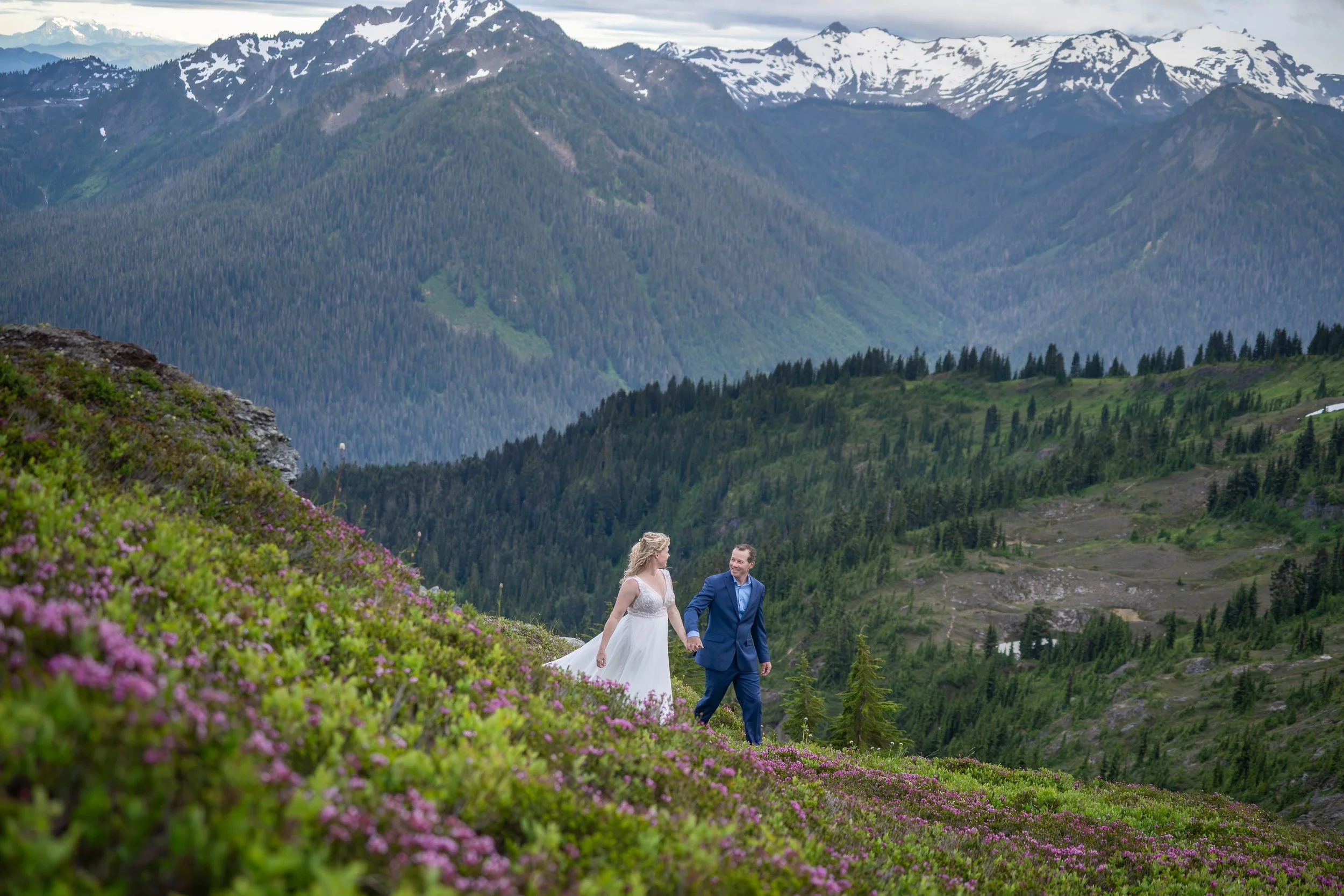
The Ultimate Guide to Washington Adventure Elopement Permits & Logistics
Exchanging vows deep in the backcountry is an intimate and wild way to kick off your marriage. But a Pacific Northwest adventure elopement has its own set of rules, and they aren’t always intuitive.
Eloping in Washington requires navigating permits from multiple overlapping land managers, tracking seasonal road and trail closures, figuring out a timeline for your day, and managing fickle weather to boot. All the logistics can quickly start to feel overwhelming.
To help you skip the stress and do things by the book, this guide breaks down everything you need to know about Washington elopement permits and logistics. Whether you’re planning a backcountry ski ceremony at Mount Baker, an alpine hiking elopement at Mount Rainier, or a rock climbing adventure wedding in the North Cascades, I’ll help you nail all the key details.
Why Trust This Guide
Hi, I’m Michael, a Bellingham & North Cascades elopement photographer who’s travelled all over Washington to capture the stories of couples like you. In addition to navigating logistics for adventure wedding photography, I’m a board member of a local backcountry nonprofit and I spend my free time skiing, climbing, and biking throughout Washington’s public lands. I know what it takes to execute a seamless day in the backcountry — and I handle everything from permits and location scouting to timelines, backup plans, and more so you can focus on enjoying the elopement experience.

Washington State Marriage Laws: Making Sure Your Elopement Counts
Before you can elope in Washington, you need to lay the legal groundwork. Thankfully, Washington’s marriage laws are straightforward, even if you’re traveling from out of state or another country.
Here are the exact state requirements and logistics you need to keep on your radar.
Rules and Timelines
No state residency required: You don’t have to be a Washington resident or U.S. citizen to get married in Washington state.
Use any county license: You can apply for a marriage license at any County Auditor’s Office in Washington. Your license is valid anywhere in the state, so you don’t have to worry about what county your elopement location falls in.
3-day waiting period: Washington has a mandatory 3-day waiting period from the day your application is processed until your marriage license becomes valid for use. This is important. If you want to get married on a Saturday, you must pay for your marriage license by Wednesday at the latest. If you’re flying into Washington for your elopement, factor this waiting period into your schedule or apply by mail ahead of time.
60-day expiration: After the 3-day waiting period ends, your marriage license is valid for 60 days. If your ceremony doesn't happen within that 60-day window, the license expires and you'll have to reapply.
How to Apply for Your Marriage License
There are two ways to get your Washington state marriage license:
In person (fastest): Apply online via your chosen county's auditor website (for example, Whatcom County Auditor), then head to the office in person to pay the fee and pick up your packet. The 3-day waiting period starts from when you pay the fee in person, not when you apply online.
By mail (best for out-of-state couples): Download the application from a county auditor’s website, complete it, and have both of your signatures notarized. Mail the physical application and payment at least 4 weeks before your trip. The 3-day waiting period starts when your application is processed, so your license will be valid by the time it reaches you.
Officiant, Witnesses & Paperwork
Washington requires an officiant: You cannot officiate your own ceremony or marry yourselves without an officiant present. But any family member, friend, or even your photographer can get ordained by the Universal Life Church in minutes and serve as your officiant. I’m legally ordained, so I can make your marriage official when you choose me as your adventure elopement photographer.
Washington requires 2 officiants: You must have two witnesses, and your officiant can’t double as a witness. If you’d like to hold a just-us elopement deep in the backcountry, we can ask other hikers or even a park ranger to sign your marriage certificate. In my experience, other people on the trail are always thrilled to be part of a mountain wedding day!
Post-ceremony paperwork: After your ceremony, you, your officiant, and your witnesses must sign the Department of Health Certificate of Marriage. Use your current legal name — not your intended new last name. Your officiant is responsible for returning the signed certificate to the issuing County Auditor’s Office within 30 days of the ceremony.
Ordering certified copies: You won’t automatically receive certified legal copies of your marriage certificate in the mail. If you need a certified copy (for example, to change your last name), you can request one through the issuing County Auditor’s Office.
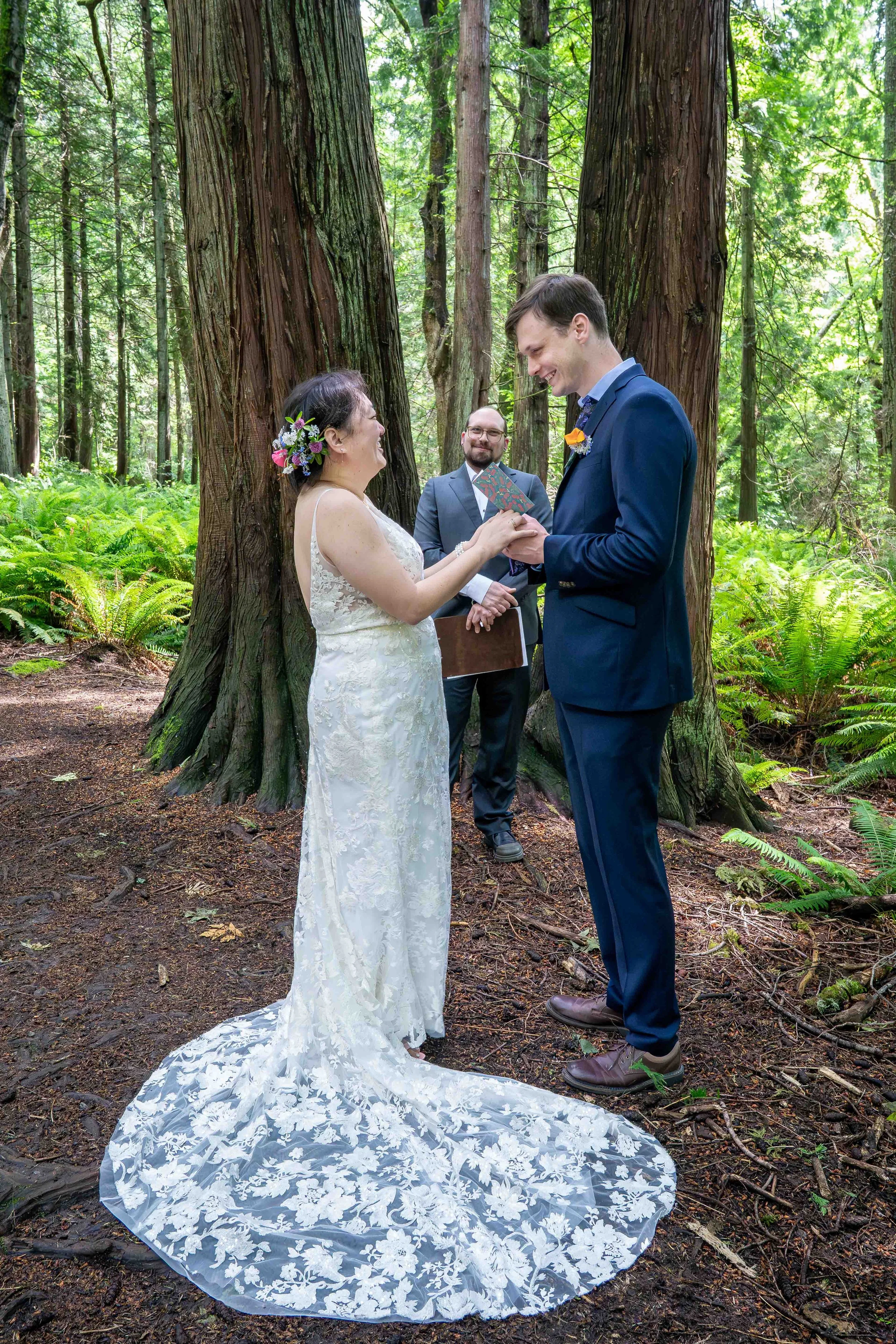
Special Use Permits: Land Rules & Fees by Region
The biggest source of confusion for couples eloping in Washington is understanding land management rules. A trail at Mt. Baker operates under a completely different permit system than a trail inside North Cascades National Park, even if they’re just a few miles apart.
Here’s a breakdown of what permits you need to elope across Washington’s mountains, how much they cost, and how to get them.
Quick Permit Comparison
| Region | Special Use Permit Required? | Application Fee | Advance Notice | Key Rules & Limits |
|---|---|---|---|---|
| Mt. Baker-Snoqualmie National Forest | No (if under 75 people) | N/A | N/A | Group size capped at 12 in wilderness areas |
| North Cascades National Park | Yes | $50 | 4+ weeks | Pre-approved ceremony sites only for larger groups |
| Mount Rainier National Park | Yes | $25 + $250 management fee | 3 days - 1 year | Pre-approved ceremony sites only, group size capped at 12 for most locations |
| Olympic National Park | Only for groups larger than 5 people | $50 | 4+ weeks | Group size capped at 12 for most locations |
| Okanogan-Wenatchee National Forest | No (if under 75 people) | N/A | N/A | Group size capped at 12 in wilderness areas (8 in the Enchantments) |
Mt. Baker-Snoqualmie National Forest
Mt. Baker-Snoqualmie National Forest is the most flexible high-alpine elopement destination in the Pacific Northwest. Popular elopement locations in this region include Mt. Baker, Artist Point, parts of Snoqualmie Pass, and the Glacier Peak Wilderness.
Permits: Mt. Baker-Snoqualmie National Forest does not require a Special Use Permit for weddings and elopements under 75 people. For intimate elopements, you can simply show up, park with your trailhead pass, and say your vows.
Location & ceremony rules: If your ceremony takes place inside a designated Wilderness Area (such as the Mount Baker Wilderness or Glacier Peak Wilderness), group size is capped at 12 people — including your photographer.
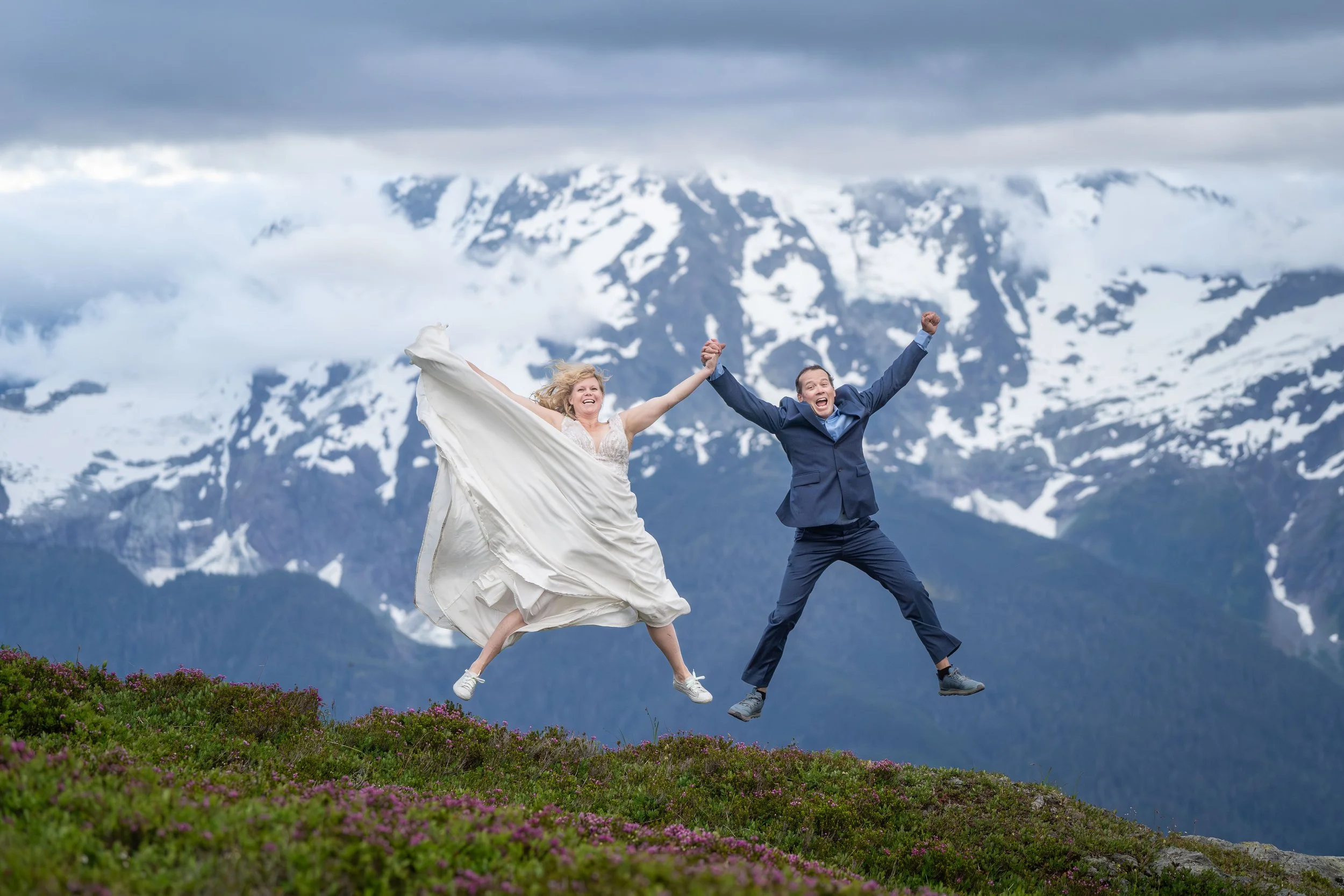
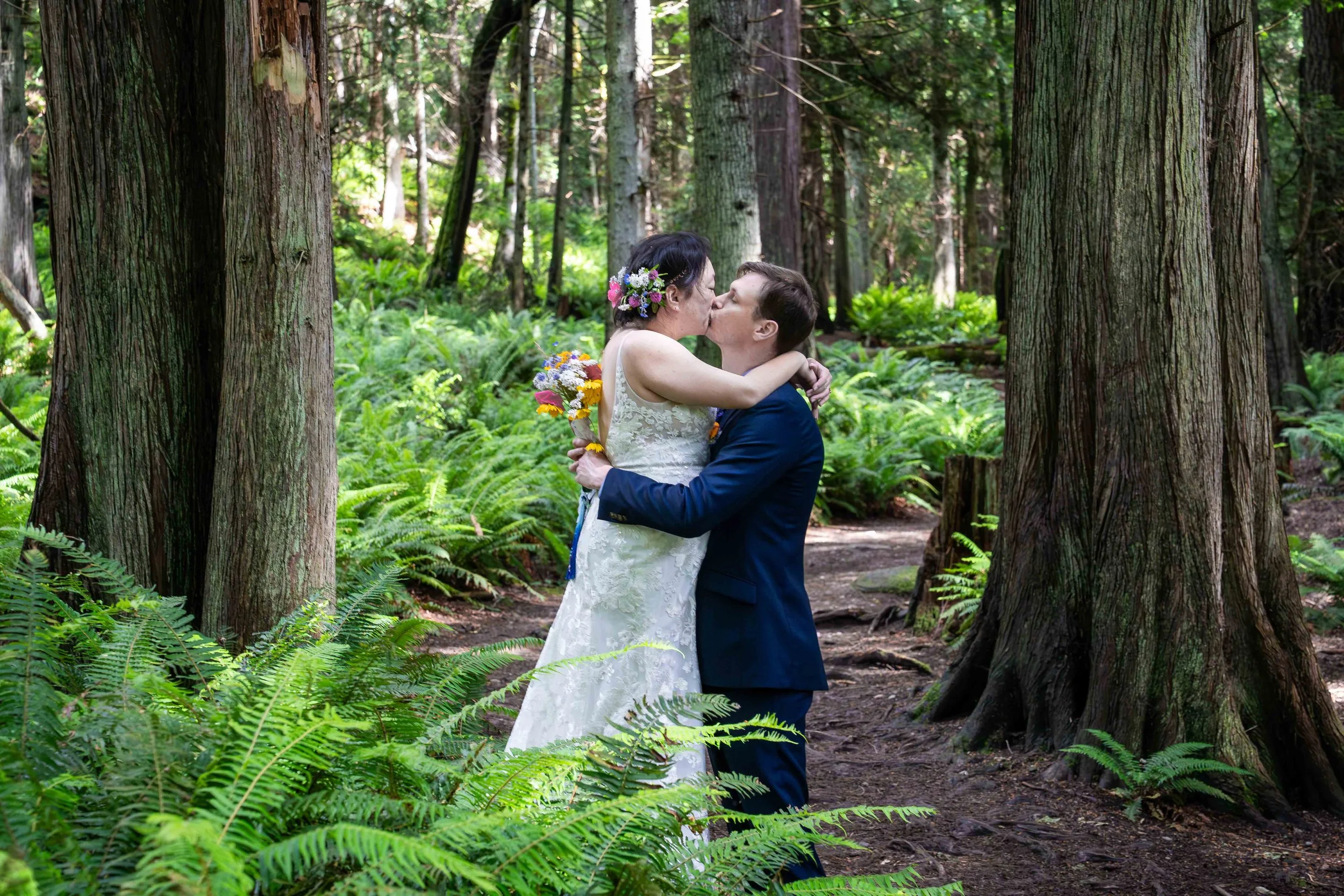
North Cascades National Park
North Cascades National Park offers dramatic, jagged peaks and a straightforward, low-cost permitting process.
Permit mandatory: Every wedding or elopement ceremony held within North Cascades National Park, Ross Lake National Recreation Area, or Lake Chelan National Recreation Area requires a Special Use Permit, regardless of group size.
Cost & timeline: The non-refundable application fee is $50. Submit your application via the park’s Commercial Services office at least 4 weeks in advance. Even more advance notice is recommended for summer elopements.
Location & ceremony rules: Just-us elopements are allowed in most locations in the North Cascades. But larger ceremonies are limited to designated locations. You can’t set up arches, chairs, or speakers anywhere in the park.
Check out my North Cascades Elopement Guide to learn more
Mount Rainier National Park
Mount Rainier National Park offers an iconic alpine landscape, but strict restrictions on weddings and elopements.
Permit mandatory: Mount Rainier National Park requires a Special Use Permit for all weddings and elopements, regardless of group size.
Cost & timeline: There’s a $25 application fee to request a permit, then a $250 management fee you must pay once your permit is approved. Applications must be submitted at least 3 days in advance, but I recommend 8-12 weeks for summer elopements.
Location & ceremony rules: You must hold your ceremony at one of Mount Rainier National Park’s pre-approved locations. you can choose from. Group size is limited to 12 along all trails, but larger groups are allowed at roadside pullouts and picnic areas.
Okanogan-Wenatchee National Forest
Okanogan-Wenatchee National Forest covers the sunny east slope of the Cascades. Popular elopement locations in this region include Washington Pass, the Methow Valley, Leavenworth, and the Enchantments.
Permits: Okanogan-Wenatchee National Forest doesn’t require a permit unless your group is larger than 75 people. All you need is a trailhead pass.
Location & ceremony rules: Groups are capped at 12 in wilderness areas like the Alpine Lakes Wilderness and Pasayten Wilderness. In the Enchantments, group size is capped at 8.
Enchantments overnight permits: Special rules apply if you want to spend the night in the Enchantments. You must have an overnight permit, which you can get through an annual permit lottery or by claiming an available permit the day before your elopement (you must be in-person in Leavenworth for this). You don’t need a permit for a single-day elopement in the Enchantments.
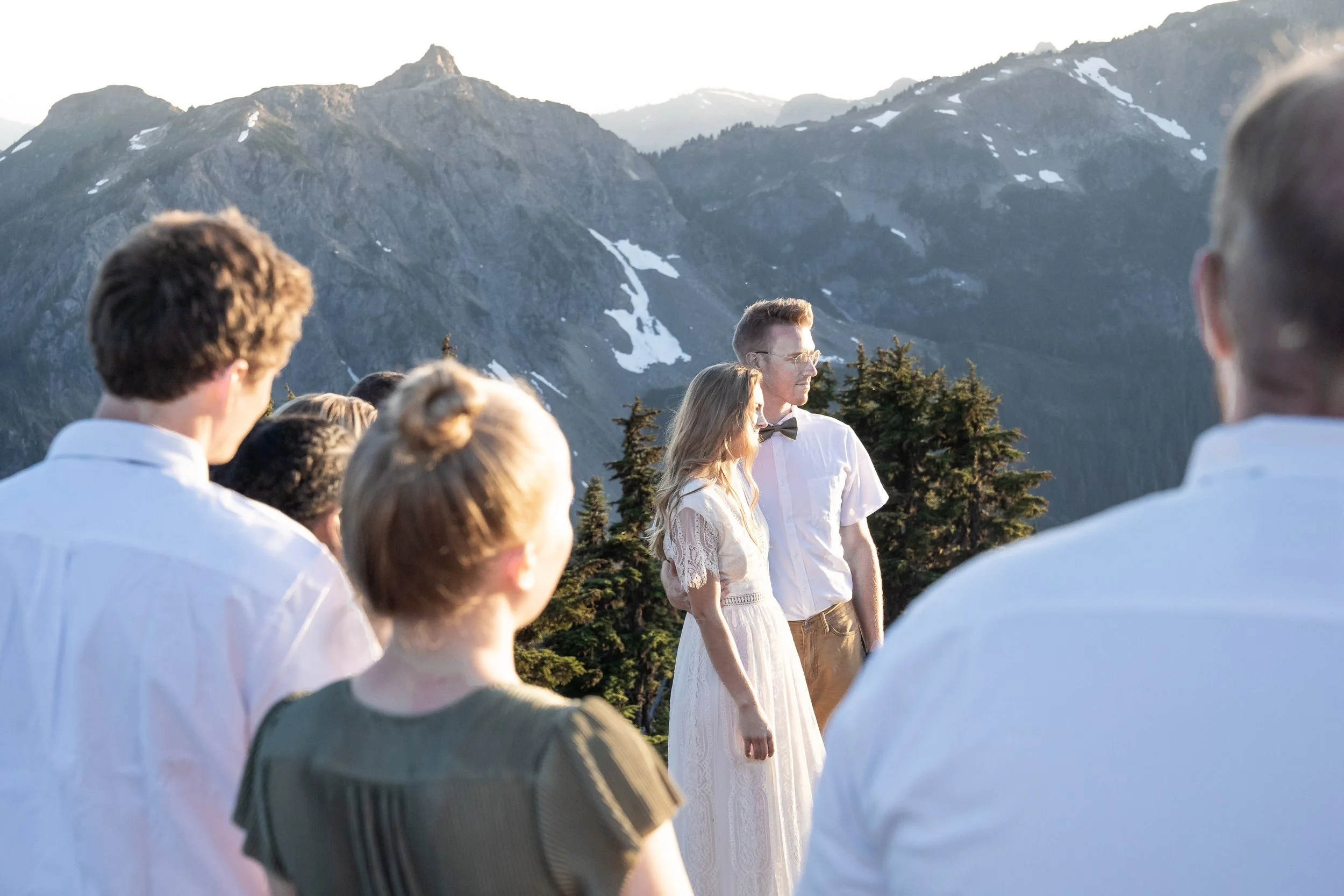
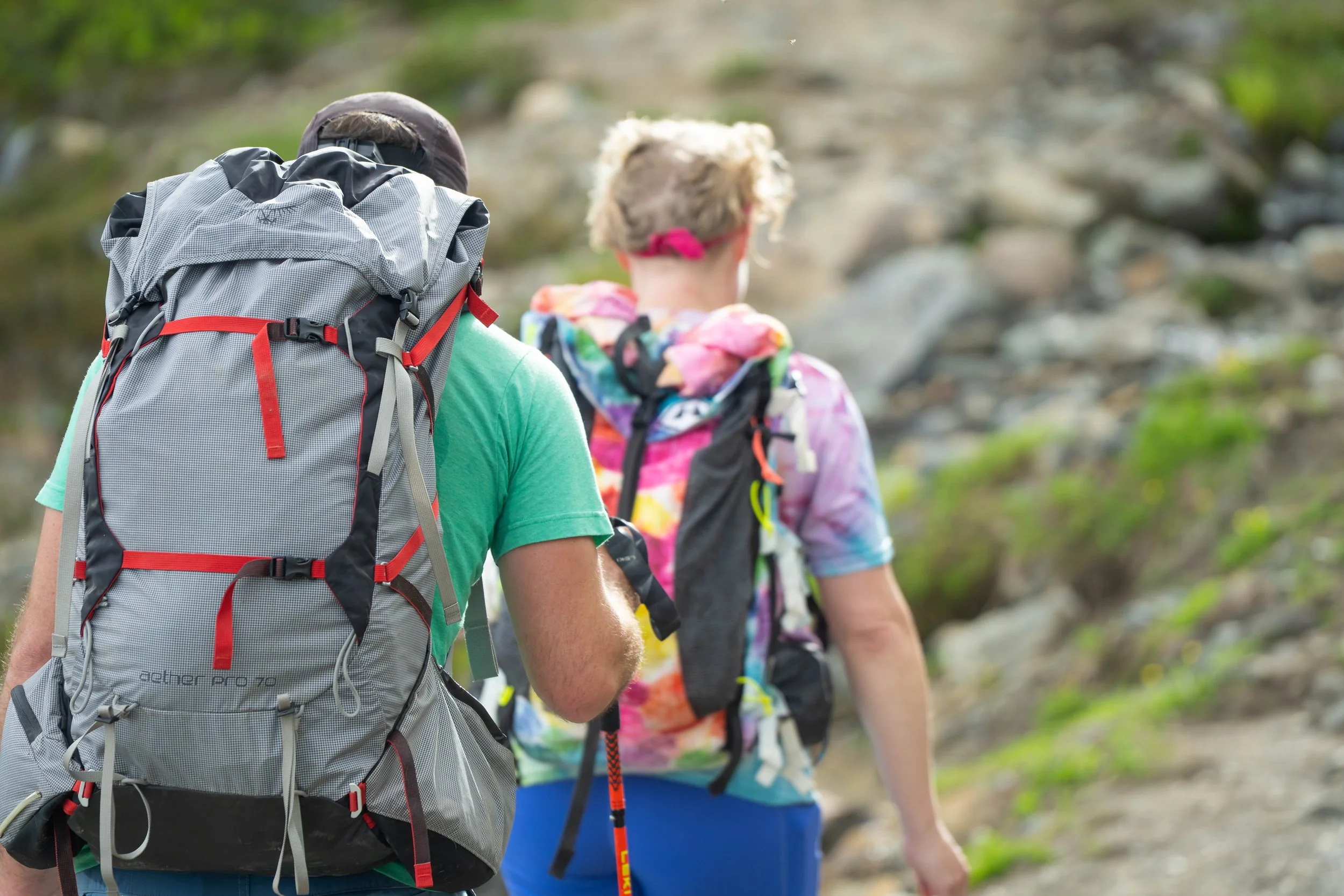
Pro tip: The park entrance in Ashford can get extremely busy during the summer, leading to hours-long backups. I strongly recommend arriving at the park early in the morning to beat traffic and get a trailhead parking spot!
Olympic National Park
Olympic National Park covers a diverse range of ecosystems, including old-growth rainforests, rugged coastlines, and alpine ridges. The park makes the permitting process simple for small elopements.
Permits: Olympic National Park only requires a Special Use Permit if you have more than 5 people at your elopement ceremony (including your photographer).
Cost & timeline: If you do need a permit, the application fee is $50. Make sure to apply at least 4 weeks in advance.
Location & ceremony rules: Group size is limited to 12 along most trails and backcountry locations. The maximum allowed group size anywhere in the park is 50.
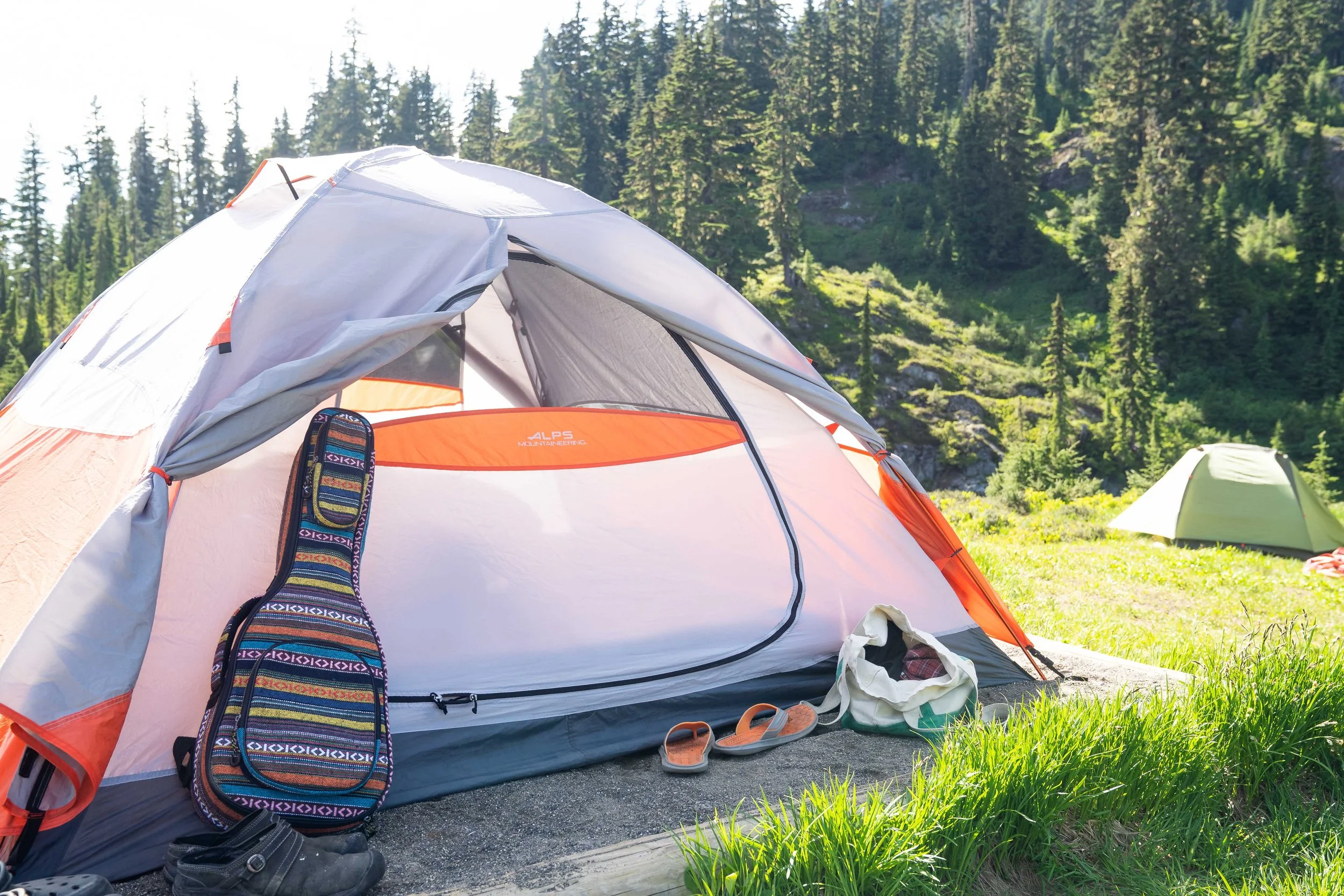
How I Handle the Permit Process for You
When you book your elopement with me, you don't have to navigate the permit process alone. All my elopement packages include help choosing the perfect location for your group size and vision, matching your timeline to permit requirements, and preparing your permit application. So you can spend the weeks leading up to your elopement dreaming about your big day instead of calling park offices.
Trailhead Logistics: Passes, Dogs, Leave No Trace & More
Vehicle Parking Passes
Make sure you — and your guests — have the right parking pass for the trailhead you plan to use on your elopement day.
Northwest Forest Pass ($5/day or $30/year): Required at all trailheads in the Mt. Baker-Snoqualmie and Okanogan National Forests. That includes Artist Point, Hannegan Pass, Washington Pass, Colchuck Lake, and more.
America the Beautiful Interagency Pass ($80/year): This is a do-it-all pass that works at all national parks in Washington and doubles as a Northwest Forest Pass. If you’re spending more than a few days hiking in Washington or visiting multiple national parks, this is the pass I recommend.
Washington State Discover Pass ($10/day or $45/year): Required for all Washington State Parks (like Larrabee and Deception Pass) and areas managed by the Department of Natural Resources like Blanchard Mountain in Bellingham. You cannot use an America the Beautiful pass in place of a Discover Pass.
Winter Recreation Sno-Park Permit (Nov 1 – April 30): If you’re planning a winter backcountry ski elopement at a Sno-Park like Hyak or Lake Wenatchee, you’ll need a Sno-Park permit instead of a summertime pass. Note there are different permits for groomed and ungroomed Sno-Parks, so be sure to check which type of Sno-Park you plan to visit.
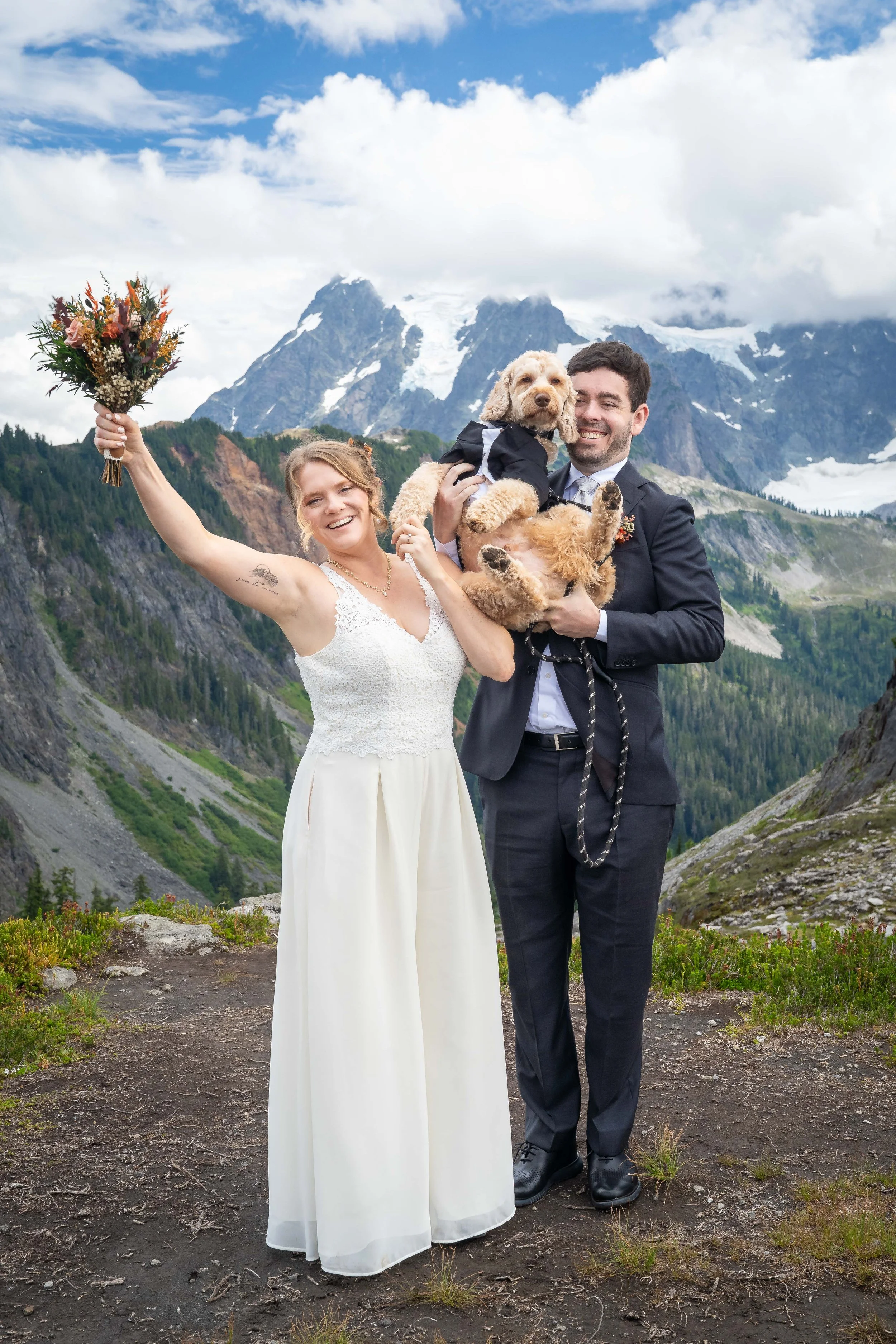
Bringing A Dog to Your Washington Elopement
For many couples, an elopement isn't complete without your four-legged family member. However, rules around bringing dogs into the backcountry vary widely depending on who manages the land.
National Parks (strictly limited): Dogs are not allowed on most trails North Cascades, Mount Rainier, and Olympic National Parks. The exception is the Pacific Crest Trail in North Cascades and Mount Rainier National Parks. In Olympic National Park, dogs are allowed on Peabody Creek Trail, Madison Falls Trail, the north shore of Lake Crescent, the north shore of Lake Quinault, and beaches between the Hoh and Quinault Reservations.
National Forests (dog-friendly): Leashed dogs are welcome on almost all trails throughout Mt. Baker-Snoqualmie and Okanogan-Wenatchee National Forests, including trails within designated Wilderness Areas.
State Parks (dog-friendly): Washington State Parks and DNR lands (like Galbraith Mountain in Bellingham) allow leashed pets on most trails.
Dog-Friendly Alpine Trail Recommendations
Here are some of my favorite spots for a dog-friendly alpine elopement in Washington:
Artist Point & Ptarmigan Ridge for 360-degree views of Mt. Baker and Mt. Shuksan
Yellow Aster Butte for high-alpine ridge hiking with stunning wildflower meadows
Hart’s Pass for endless North Cascades views and golden larches in the fall
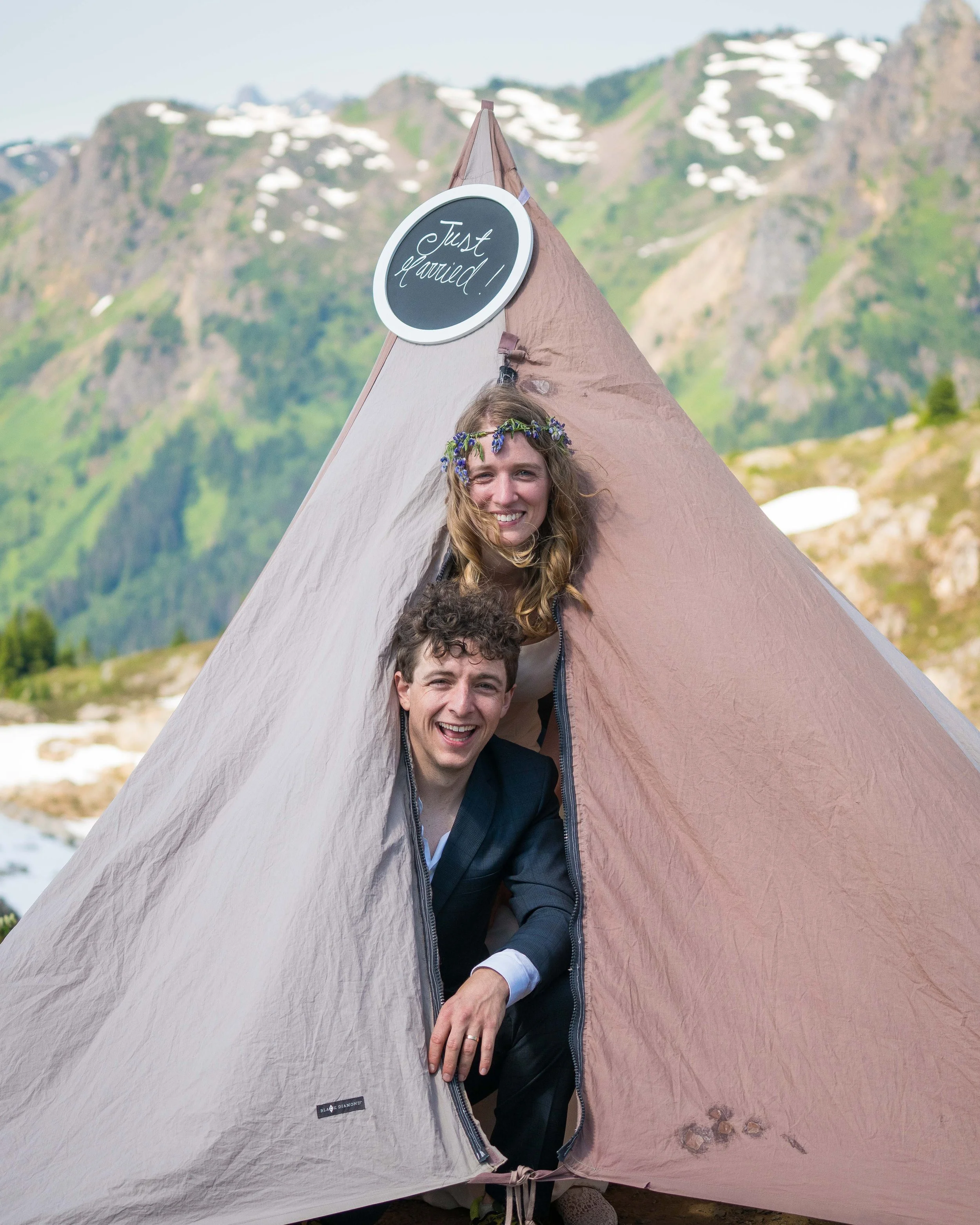
Overnight Backcountry Permits
If your dream elopement involves backpacking into an alpine basin, camping under the stars, and waking up early for sunrise vows, you may need an overnight backcountry permit. Crucially, this is separate from any Special Use Permit you get for your elopement.
Here’s how backcountry permits work by region in Washington:
Mt. Baker-Snoqualmie National Forest
No overnight permits required.
Fire lookouts like the Winchester Mountain Lookout or Park Butte Lookout are available on a first-come, first-served basis.
North Cascades National Park
Backcountry permits are required for all overnight stays in the park’s backcountry.
You can reserve a permit on Recreation.gov or visit the Wilderness Information Center in Marblemount to claim an available permit up to 24 hours before your trip.
For popular sites, you can try to get a permit early by joining the permit lottery held annually in March.
Mount Rainier National Park
Backcountry permits are required for all overnight stays in the park’s backcountry.
You can reserve a permit on Recreation.gov or visit a visitor center in-person to claim an available permit. For permits reserved online, you must still visit a visitor center before your trip to activate it.
To reserve popular sites like those along the Wonderland trail, you can join an annual permit lottery held in February.
Olympic National Park
Backcountry permits are required for all overnight stays in the park’s backcountry.
You can reserve a permit on Recreation.gov or visit the Wilderness Information Center in Port Angeles to claim an available permit up to 24 hours before your trip.
Popular areas like Seven Lakes Basin and Royal Basin have limited permits available online. But there are additional permits available if you call or visit the Wilderness Information Center.
Okanogan-Wenatchee National Forest
No overnight permits required except in the Enchantments Permit Zone.
In the Enchantments, overnight permits are required from May 15-October 31. You can get a permit by joining the annual permit lottery held in February, making a reservation online, or entering a daily lottery held online (you must be within 1 mile of the Leavenworth ranger station to join the daily lottery).
Drone Regulations
Drones offer a birds-eye view of your mountain elopement, but there are significant restrictions on where you can use them in Washington’s mountains.
Drones are fully prohibited in National Parks: Drones are not allowed at all in North Cascades, Mt. Rainier, or Olympic National Parks. No exceptions.
Drones are also prohibited in Wilderness Areas: This includes huge portions of the Mt. Baker-Snoqualmie and Okanogan-Wenatchee National Forests once you leave the road.
Where you can fly: Drones are permitted to fly on non-wilderness National Forest lands, such as around roads and trailheads. Drone operators must hold an FAA Part 107 commercial certification, maintain a direct line of sight, and avoid flying over wildlife or people.
Leave No Trace (LNT) for Mountain Elopements
It’s important to leave the backcountry just as we found it at the end of your elopement.
Stay on durable surfaces: As much as possible, stick to established trails and durable surfaces like rocks. Avoid walking through fragile alpine meadows.
Pack it in, pack it out: Whatever you bring onto the trail with you has to come back to the trailhead with you. That includes food, garbage, human and pet waste, and anything you brought with you for your ceremony.
Check your flowers: Flowers can really make an elopement pop. Just make sure you don’t bring seed-bearing or invasive plants in your bouquet.
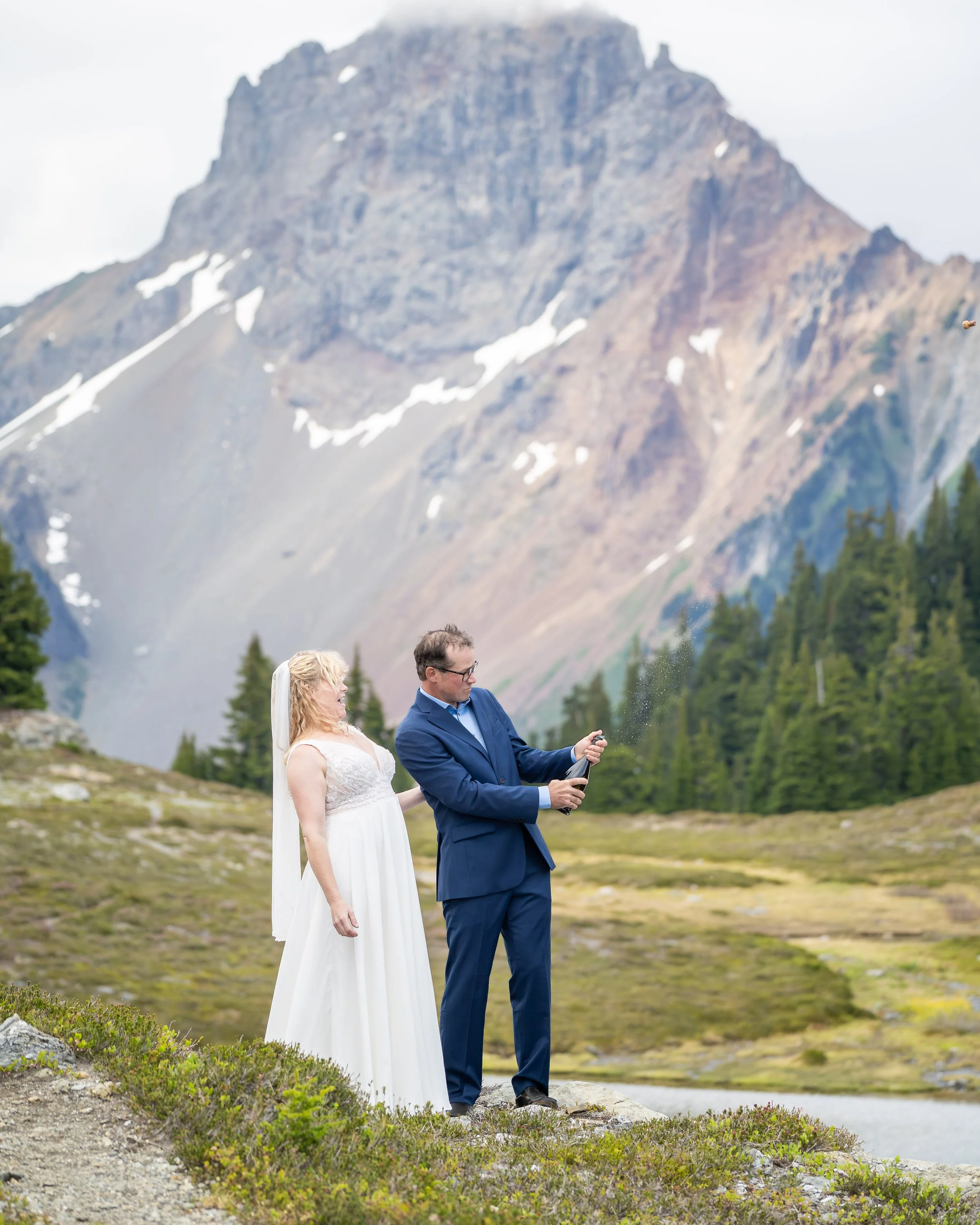
Leave banned items at home: Confetti, rice, glitter, and flower petals are banned on public lands. If it’ll be hard to clean up after your ceremony, leave it at home.
Fire restrictions: Most of Washington is under burn bans in late summer. Don’t bring anything that can spark — and remember sparklers and fireworks are fully prohibited on public lands.
Seasonal Changes: Mountain Road Access & Washington Weather
Washington’s mountains are buried under snow for a significant portion of the year, so it’s important to know when roads and trails open up and how conditions vary through the seasons so you can plan your elopement accordingly.
Mountain Road & Pass Closures
Some of the best high-alpine access in Washington is at the ends of roads that don’t open until June or July. Here are the key roads to watch and when they’re accessible.
Pro Tip: While the final 2.7 miles of SR 542 to Artist Point closes for the winter, the road remains open to Heather Meadows and the Mt. Baker Ski Area year-round. That makes this area a premier destination for backcountry ski elopements and spring adventure weddings in the snow.
Spring (April—June)
Spring brings the first wildflowers of the season to low-elevation slopes around the Methow Valley and Wenatchee, making for incredible views on the east side’s ridgeline trails.
Best for: Low-elevation wildflower elopements and mountain bike weddings
Trade-offs: Stormy weather requires flexibility and alpine areas are still deeply covered in snow
| Road | Typical Opening | Typical Closing | Key Destinations Accessed |
|---|---|---|---|
| Artist Point (SR 542) | Mid-June to mid-July | Mid-October | Artist Point, Ptarmigan Ridge |
| North Cascades Highway (SR 20) | Early May to early June | Early November | Washington Pass, Rainy Pass |
| Sunrise Road (Mount Rainier National Park) | Late June to early July | Mid-October | Sunrise Point, Burroughs Mountain, Fremont Lookout |
| Chinook Pass (SR 410) | Late May to early June | Mid-November | Tipsoo Lake, Naches Peak Loop |
Breaking Down the Seasons: When to Elope in Washington
Summer (July—August)
Summer is peak elopement season in Washington. Alpine trails melt out, offering access to the high peaks and passes, and the weather is reliably sunny.
Best for: Alpine hiking and backpacking elopements throughout Washington’s high country
Trade-offs: Trails are at their most crowded in summer and late summer can bring wildfire smoke
Fall (September—October)
Fall brings spectacular colors to Washington’s alpine landscapes and the first dusting of snow. Most alpine areas remain accessible until mid-October and the summer crowds die down on many trails.
Best for: Alpine elopements surrounded by fiery red huckleberry bushes and golden larches
Trade-offs: Shorter days, colder nights, and crowds at popular larch season trailheads like Blue Lake and Rainy Pass.
How to Handle Unpredictable Mountain Weather: My Top 3 Tips
Washington is famous for its moody weather. So it’s important to factor the weather into your elopement plans and know how to adapt when the skies throw you a curveball.
Go east. The Cascade Mountains split Washington’s climate in two. The west side of the state — including Mt. Baker, Mt. Rainier, and the Olympic Peninsula — is the wet side. The east side of the Cascades — including Washington Pass, the Methow Valley, and the Enchantments — is the dry side. If the forecast shows rain on your elopement day, simply switching to a backup location on the east side is often enough to find sunshine.
Stay flexible. Plan your day around lighting and conditions rather than going strictly by the clock. For example, you can move a sunset ceremony to sunrise if a storm is rolling in mid-afternoon. Whenever possible, I recommend having a backup date planned in case bad weather keeps you out of the mountains altogether.
Embrace it. Some of the most memorable and romantic moments happen when the weather doesn’t go according to plan. As long as conditions are safe, lean into getting wet — splash through puddles, laugh through a downpour, and make rain gear part of your wedding attire. Embracing the elements turns unexpected weather from a wedding disruption into the best story of your adventure together.
Winter (November—March)
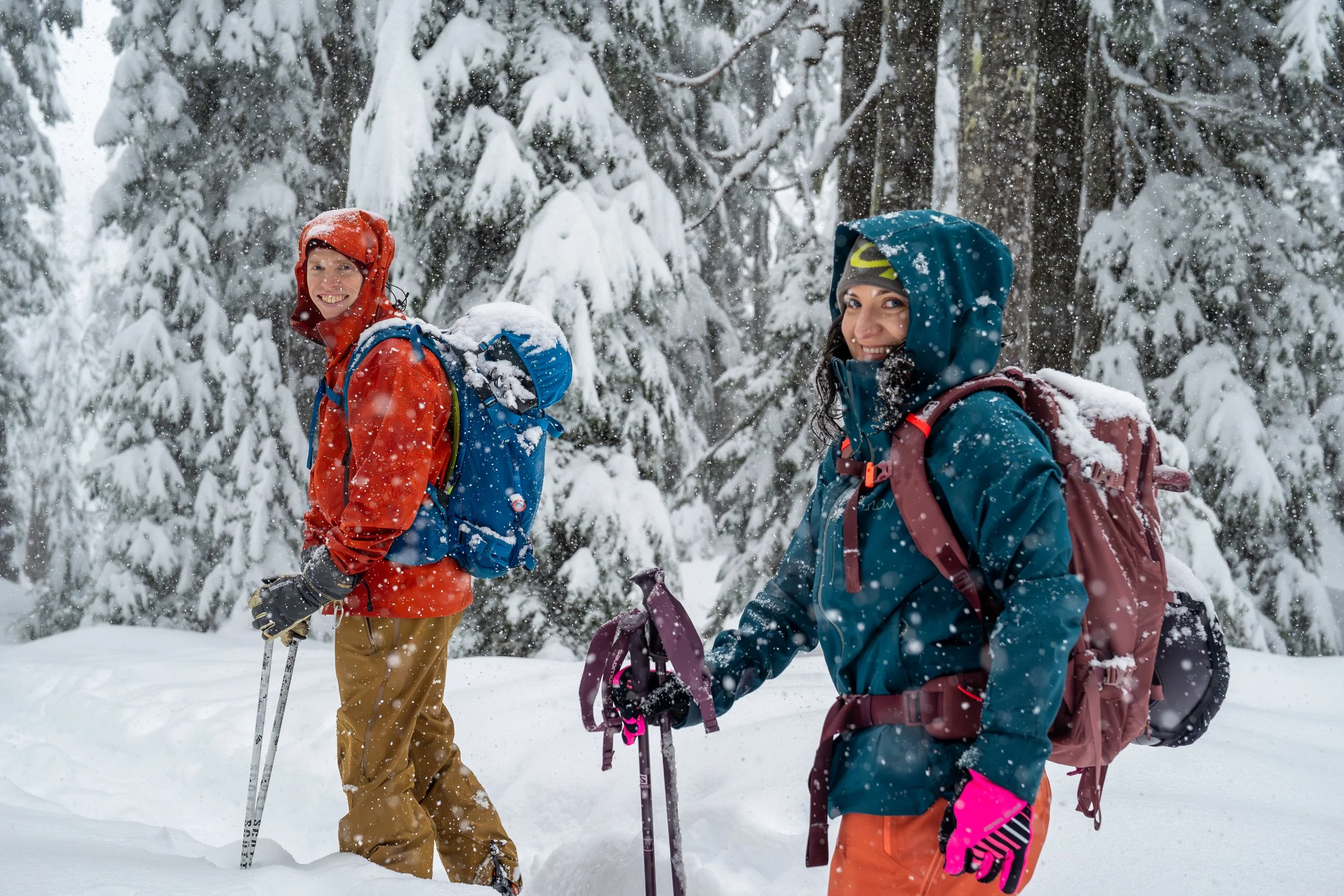
Winter comes early in the mountains. Expect short days, unpredictable and stormy weather, and lots of snow—perfect for skiing and snowshoeing!
Best for: Backcountry skiing and snowshoeing elopements in a winter wonderland
Trade-offs: Stormy weather requires flexibility. Trips into the backcountry require avalanche training.
Ready to Plan Your Washington Adventure Elopement?
Planning a mountain elopement should feel like an exciting adventure, not a full-time job. Whether you’re dreaming of an alpine elopement at Mt. Rainier, a ski ceremony on Mt. Baker, or tying the knot deep in the North Cascades, you don’t have to figure out the details alone.
As your Washington elopement photographer, I handle both the logistics and the lens. I do the heavy lifting behind the scenes — scouting locations, securing permits, and building your custom elopement timeline — so you can just show up and be completely present for the experience.
Let's turn your wedding day into your greatest adventure yet.